
THANK YOU FOR SUBSCRIBING
× 
Construction Tech Review Weekly Brief
Be first to read the latest tech news, Industry Leader's Insights, and CIO interviews of medium and large enterprises exclusively from Construction Tech Review





Bryden Wood
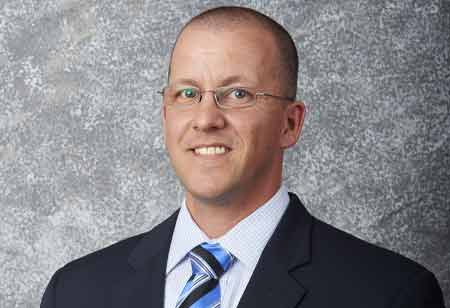
Jaimie Johnston, Director, Head of Global Systems
Many Innovations, Just One Process

Jaimie Johnston
There is lots of talk about change across the industry; from DfMA (design for manufacture and assembly) to Digital Twins, from MMC to Platforms, buzz words are rife. However, they are often talked about as though they are individual, separate initiatives; solutions in isolation. As if we can sprinkle bits of innovation here and there into a traditional construction process and hope to get far better results.
To create the change we want, we need to create a wholly new approach with a guiding logic where everything works together as part of one process. Technology isn’t here to help us ‘do traditional construction better.’ It’s here to help us be smarter, to inform a new way of thinking about design and construction.
It is increasingly accepted within the industry that many of the well-documented challenges will be solved by a move to a more manufacturing-led approach. It is often said that in construction, every project is a prototype; one crucial aspect of DfMA is that learning can be captured and built on; standardised repeatable solutions will lead to improvements over time. ‘Continual improvement’ is the manufacturing mantra that led to vast gains in quality and productivity, achieved through accumulating many marginal gains in product and process. Contrast this to construction’s equivalent ‘constant reinvention,’ and it is clear why we lag.
However, as the sophistication of the delivery process increases, the nature of the digital work-flow must adapt to support it. There is little point in creating a highly manufactured solution that is described using traditional drawings and documents. Conversely, it doesn’t make sense to develop an advanced digital workflow that is used to drive a traditional construction process.
If we start to think of our future assets as unique configurations of standard components, it becomes more obvious that we need a new set of tools to help. Rather than start with a ‘blank sheet of paper,’ we should build on an existing pool of systems and solutions. The creative challenge is in finding the best configuration for a given brief and site and enhancing our ‘kit of parts’ to make it better performing and more adaptable. We should remember that the term DfMA describes the process – DESIGN for manufacture and assembly – not the product.
The issue is that we need to find a way to engage a large community of designers in this new process, by providing digital tools to accelerate their adoption of new ways of working. Rather than carrying out a traditional design process and retrofitting DfMA, we need to provide the tools that facilitate this thinking from the earliest stages of design.
This led us to develop the new free to use, web-based, open-source digital configurators that we launched recently: PRISM (for housing) and SEISMIC (for schools). PRISM embeds manufacturing logic for a range of delivery systems; from modular to flat pack. It’s critical that we can keep our options open in the design phase, to ensure that we chose the delivery system that best fits the site and builds requirements. Configurators help designers do just that. They enable the consideration of many different possibilities, creating a huge range of different options, which can then be narrowed down based on the client value drivers and site-specific context.
As DfMA matures, we, as designers, need to be comfortable using a range of systems, to find the right solution for the right site.
And it isn’t only design professionals who can benefit. With SEISMIC, other stakeholders such as parents, teachers, and even pupils can use the configurator app to contribute their ideas and thinking to a project. For some it may even enable a move into construction design.
We believe that this new process must start with digital models from as early as possible, populated with every last bit byte of data so that the performance of different designs can be tested, evaluated, and optimized. Those digital models would enable DfMA solutions that can make everything from a home to a hospital or factory. So instead of the asset being a one-off prototype, it could benefit from the economies of scale that manufacturing offers.
Democratizing the design process in this way, and extending DFMA out from the initial design process, is important for this approach to happen at scale. And the more of it there is, the better it will become. Beyond the benefits of economies of scale and a quickly-trained workforce with transferable skills, there are other benefits. With a more intelligent, connective design and construction process, the overall performance of an asset, and each component within it can be monitored. Collating and analyzing data from sensors will accelerate the ‘continual improvement’ cycle. Then, with a big enough data pool, machine learning tools will be able to self-configure high performing, readily manufacturable assets.
No single innovation, whether digital or physical, represents the complete solution. It’s the process these solutions are part of, that matters. It’s one process, and one goal – finding the best possible solution to both design and construction. It is this holistic new process that can transform our industry, and for us, that makes this an exciting time to be working in it.
The articles from these contributors are based on their personal expertise and viewpoints, and do not necessarily reflect the opinions of their employers or affiliated organizations.
Read Also
Protecting Workers on Construction Sites: Beyond OSHA Minimums
Curtis Corley, Director of Safety – South, AECOM Hunt [NYSE: ACM]

Innovating the Future of Construction: Insights From Power Design's Leadership
Joshua Nelson, Director of Technology Experience, Power Design, Inc

How to leverage Building Information Modeling (BIM) for historic buildings
Michael Carrancho, Deputy Director Office of Planning Design and Construction, Engineering and Design Division, Smithsonian Institution

Modular Construction and automation in construction
Mohamad Yasser Baaj, CEO, B3G Engineering Services

Retail Project Management Experience
Ciro Mascarenhas Falluh, Senior Director - Construction & Facility Maintenance, Groupe Dynamite

BIM in Real Estate Development
Ricardo Rosa, Director of Digital Business Development, Sonae Sierra


 Copyright © 2026 All Rights Reserved | by:
 Construction Tech Review
| Subscribe | Sitemap| Newsletter| Editorial Policy| Feedback PolicyTop
